8 White Hat Link Building Strategies That Work in 2026
Author

Head of 360 SEO
8 White Hat Link Building Strategies That Work in 2026
Most link-building advice hasn't caught up with how search actually works in 2026. The playbooks written in 2022 assumed Google was the only audience that mattered, domain rating was the primary currency, and volume was a legitimate substitute for quality.
That world is gone. Today, the links you earn are evaluated by Google's spam detection, by AI systems deciding which brands deserve to be cited in generated answers, and by real people who may or may not click through.
This guide breaks down what actually works right now, why it works, and how to execute it in a way that produces durable results across both traditional search and AI-driven discovery.
What Actually is White Hat Link Building?
White hat link building is the practice of earning backlinks through editorial merit, genuine value, and real relationships rather than manipulation or payment schemes. The brands that have figured this out earliest, particularly in competitive verticals like casino SEO or finance SEO, where trust signals are scrutinized heavily, have built authority profiles that are genuinely difficult to compete with.
The most useful test isn't technical — it's editorial: would this link exist if SEO didn't exist? If a journalist, blogger, or resource curator would genuinely reference your page because it serves their audience, you have a white hat link. If the link only exists because money changed hands or a scheme was manufactured, you don't regardless of how clean it looks on the surface.
In 2026, this distinction matters more than ever. Google's SpamBrain evaluates link patterns in real time, reading context, topical relevance, and behavioral signals simultaneously. Manipulative tactics that passed undetected two years ago are now caught and devalued at a pace that makes them economically irrational.
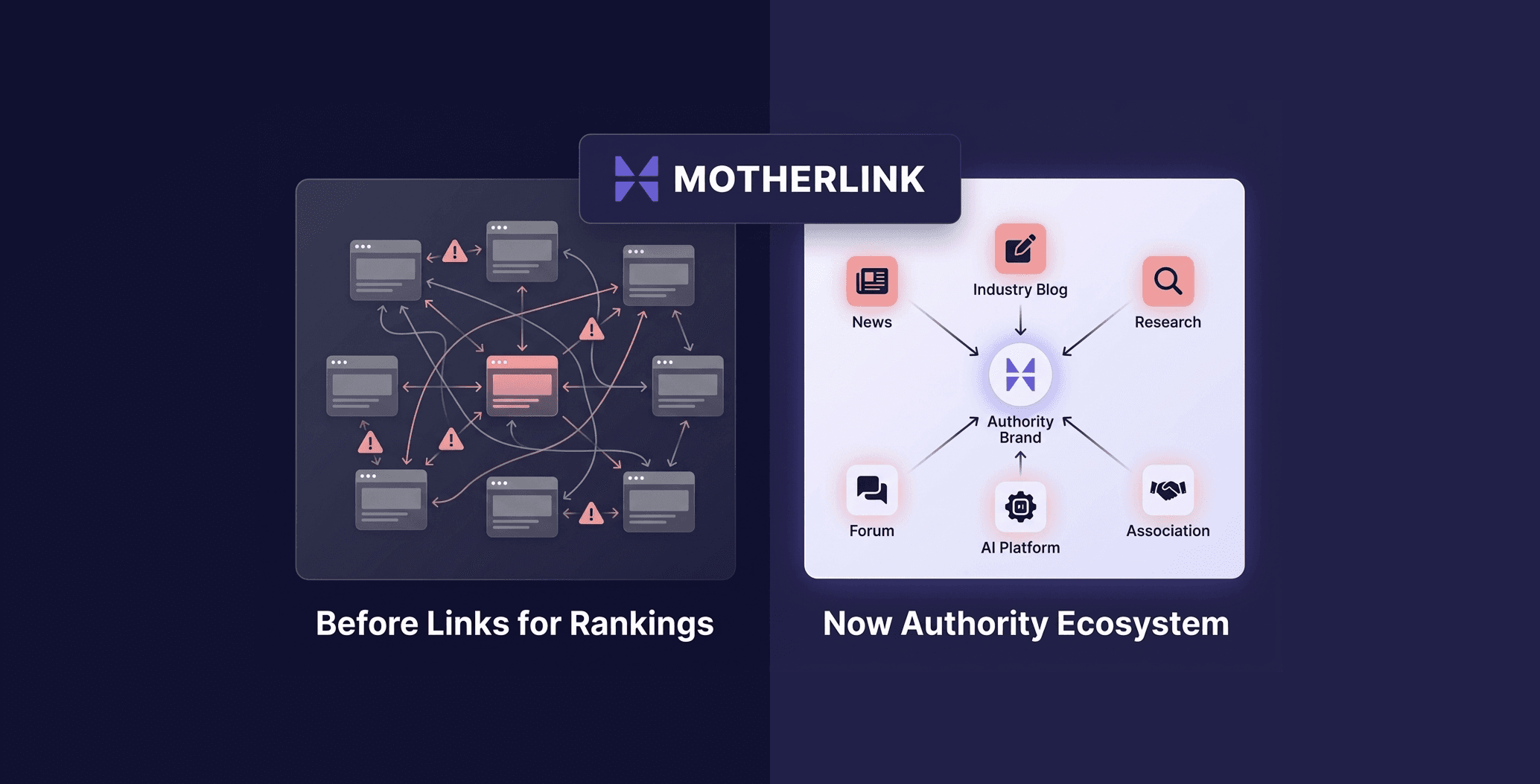
But the definition of white hat has expanded. Earning links is no longer just about ranking in Google. It's about building an authority ecosystem — a distributed network of signals across the web that tells both search engines and AI platforms that your brand is credible, relevant, and worth citing:
Backlinks: editorial links from relevant, trusted domains
Brand mentions: linked and unlinked references across authoritative sources
Entity recognition: your brand existing as a clearly defined entity across multiple domains
AI citations: inclusion in AI-generated answers from Google AI Overviews, ChatGPT, and Perplexity
A link-building strategy that only targets the first of these four is incomplete by 2026 standards.
What Makes a Link Good?
Not all white hat links are equal. This is especially pronounced in regulated or high-YMYL niches, a point our SEO experts consistently flag as the most misunderstood aspect of link quality assessment.
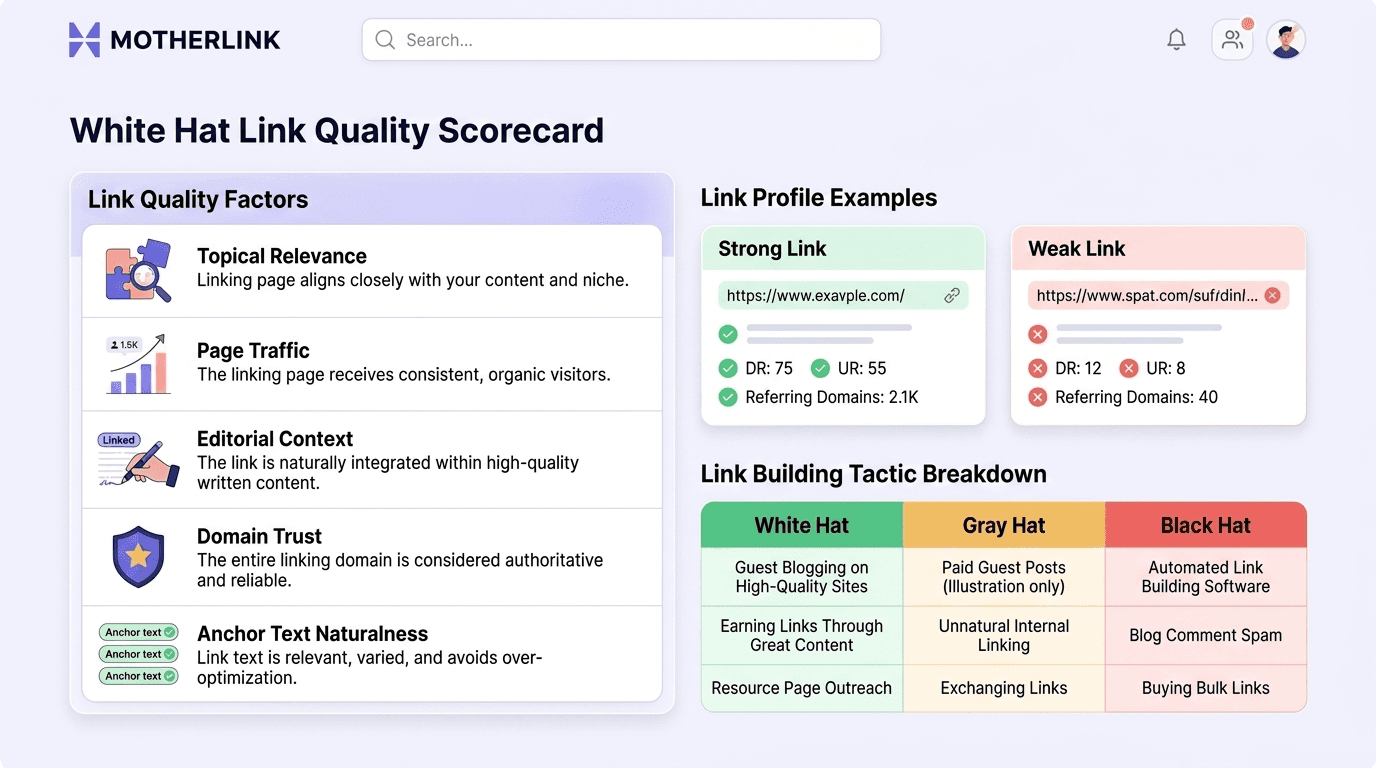
The five factors that determine link quality in 2026:
1. Topical relevance. The linking page should cover content genuinely related to the page being linked to. Relevance at the page level matters more than relevance at the domain level.
2. Real traffic on the linking page. Always check page-level traffic in Ahrefs or Semrush before pursuing a placement. A link on a page with zero traffic, even on a DR 70 domain, passes far weaker signals than a link on a DR 45 page with 2,000 monthly visits.
3. Editorial context. The link should appear naturally within content written for a real audience, not in a footer, sidebar, or boilerplate. A contextual body link is meaningfully stronger than a link buried in a list of 40 others on a distribution page.
4. Domain trust signals. Red flags: thin content, high outbound link ratios, no visible editorial team, backlink profile populated by link scheme participants.
5. Anchor text naturalness. A natural link profile has a healthy distribution of branded, generic, and descriptive anchors. Exact-match commercial anchors repeated across your profile are a pattern SpamBrain specifically targets.
Use this as a scoring checklist. A placement that holds up across all five factors is worth pursuing. One that fails two or more, even if technically "editorial", may not justify the effort.
White Hat vs. Black Hat vs. Gray Hat: What to Avoid in 2026
In 2026, the gray zone is rapidly shrinking, and that's the most practically important thing to understand.
Black hat: PBNs, automated link tools, link farms, hacked site injections, hidden links, and comment spam. Recovery from a manual penalty is long, expensive, and never fully guaranteed.
White hat: genuine digital PR placements, guest contributions on editorially rigorous sites, links from linkable assets, contextual niche edits, broken link building, resource page outreach. These compounds in value and carry zero penalty risk.
Gray hat: reciprocal link exchanges (only 9.3% of SEOs consider these effective), paying editorial fees for placement, and scaled guest posting on "write for us" pages with minimal organic traffic. SpamBrain now classifies many of these patterns alongside outright black hat, because the signal it looks for isn't intent, it's a pattern.
What to avoid specifically in 2026:
Scaled, pattern-based link schemes. Uniformity in velocity, format, anchor text, or placement is detectable
Paid links without editorial value. Payment for placement on sites that exist to sell links, not serve readers
Irrelevant placements for volume. Links from unrelated domains, because the price was right
Over-optimized anchor text at scale. A profile dominated by exact-match commercial keywords is a fingerprint
In 2026, Google doesn't just detect bad links; it detects bad patterns. And AI systems actively discount brands whose authority signals come primarily from low-trust sources. White hat link building isn't the cautious option. It's the only option with a durable positive return.
For businesses that need link-building to work as part of a broader growth system, not just an isolated ranking tactic, a full SEO approach that connects off-page authority with on-page and technical foundations is what actually moves the needle.
Not sure if your current link profile is working for or against you? Book a free link-building consultation and get a clear picture of where you stand before your next campaign.
The Evolution of Link Building: A Timeline
Link building shifted through a series of forcing events, each one narrowing what worked and raising the bar for what didn't. Understanding that progression explains why tactics that dominated in 2022 are liabilities in 2026.
2012: The Penguin Update Changes Everything
Before Penguin, link building was a numbers game. Penguin changed the calculus: for the first time, links could hurt you. Volume without quality wasn't just ineffective, it was dangerous.
2016: The Content Marketing Era
With manipulation penalized, the industry pivoted to earning links through content. This era produced the foundational tactics still in use today, linkable assets, relationship-driven guest posting, and outreach-led distribution. The limitation: it still treated Google rankings as the only output that mattered.
2019: E-E-A-T and the Rise of Link Quality
Google's emphasis on Experience, Expertise, Authoritativeness, and Trustworthiness shifted the conversation from link quantity to link quality. Topical authority emerged as a strategic concept; links clustered around a coherent subject area built stronger signals than the same number scattered across unrelated topics. This is also when industries with higher trust thresholds, like finance, healthcare, and legal, started requiring demonstrably stronger authority signals just to compete.
2022: Guest Posting, HARO, and the Infographic Peak
The industry found its scalable playbook: systematic guest posting, HARO for editorial mentions, and infographics for passive link earning. "Scalable" and "pattern-based" are functionally the same thing in Google's detection framework. HARO became saturated, infographic link building lost its edge, and guest post farms became increasingly hard to distinguish from legitimate publishers.
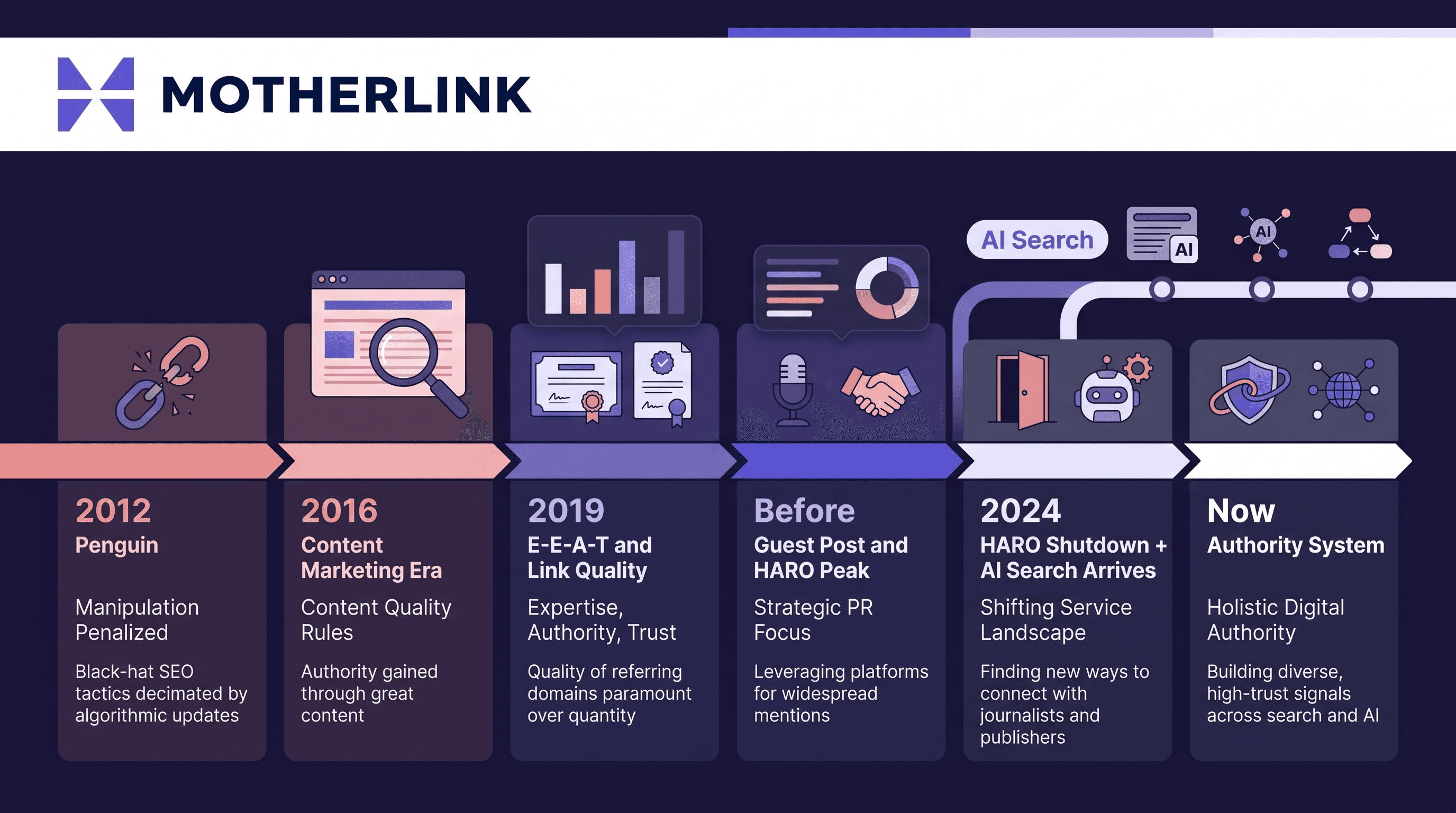
2024: HARO Shuts Down, and AI Search Arrives
HARO shut down, fragmenting journalist outreach across Qwoted, Featured, Source of Sources, and #JournoRequest on X. AI-powered search went mainstream, Google AI Overviews, ChatGPT, Perplexity. Suddenly, "ranking on Google" wasn't the only outcome that mattered. The shift from links as ranking signals to links as authority validation signals had begun. For brands already investing in AI SEO, this shift validated what they were already building toward.
2026: Where We Are Now
Link building is now one input into a broader authority-building system that must perform across two environments: traditional search and AI-generated search. AI platforms have captured 12–15% of the global search market share, with over 71% of Americans now using AI to search. A strategy built only for Google is already leaving significant visibility on the table. Executing consistently across multiple markets adds another layer of complexity that a joined-up international SEO approach needs to account for from the start.
Link-building strategy has changed more in the last two years than in the previous decade. If your current approach was built on a 2022 playbook, it's worth a second look. Explore our self-serve backlink platform, built with the filters, quality controls, and SEO expert support you need to execute a 2026-standard strategy without the agency overhead.
How Link Building Has Changed: 2022 vs. 2026
If you ran a link-building campaign in 2022 and it worked, that's a risk factor in 2026, not an asset. The tactics, metrics, and mindset that produced results three years ago are either less effective today or actively counterproductive.
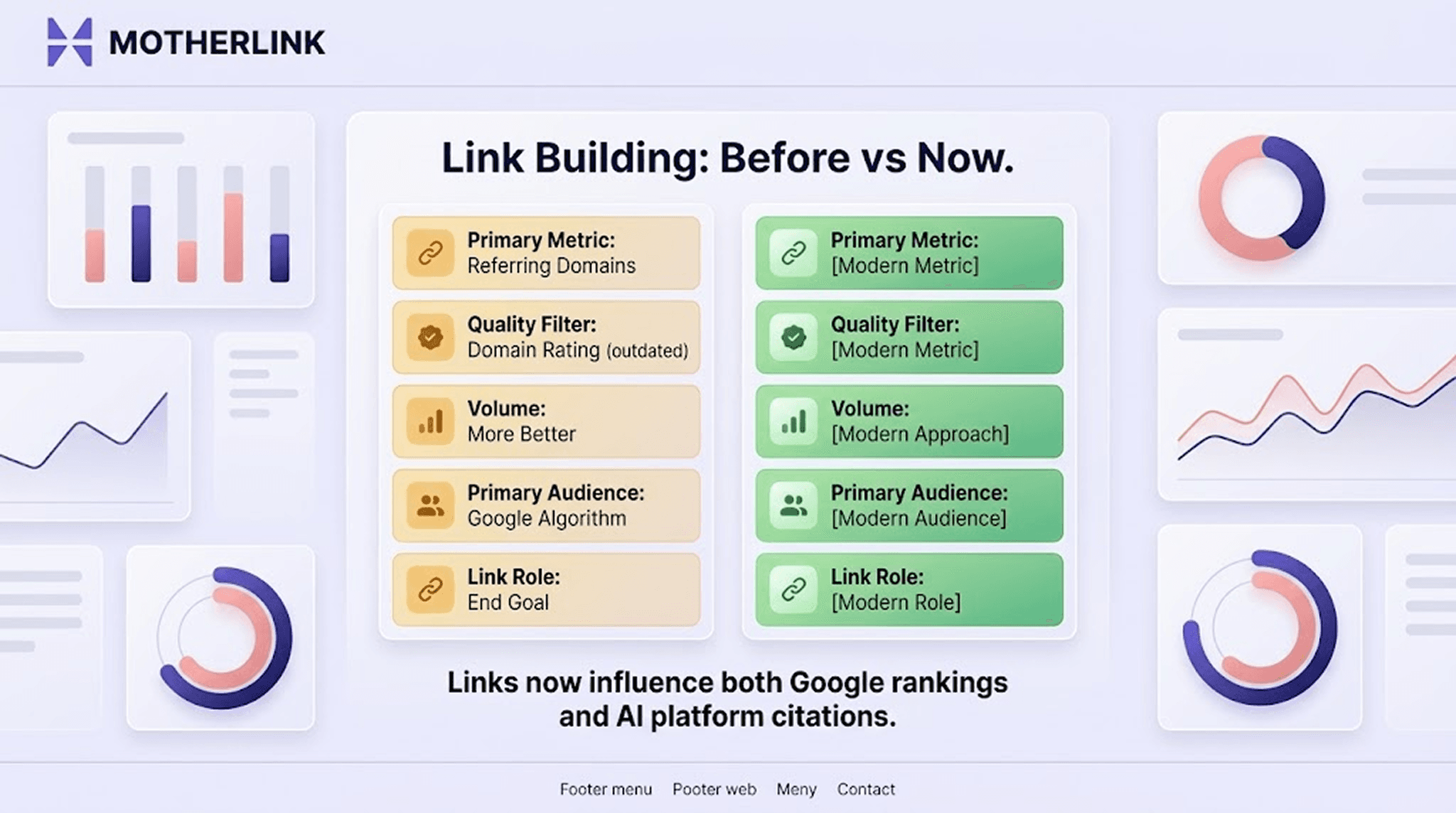
The 2022 Model: Links as Output
In 2022, most link-building programs were measured by one metric: how many links did we get? Domain rating was the primary quality filter. Volume was the primary success indicator. A target list of DR 40+ domains, a templated outreach sequence, a monthly quota, and a report showing referring domain growth. The problem wasn't the tactics; it was the underlying assumption that a link was a link, more was better, and Google's primary job was to count them.
The 2026 Model: Links as Input
In 2026, a link is an input into a broader authority-building system. The metrics that matter now:
Traffic quality. Does the linking page send real visitors who engage?
Ranking movement on target topics. Are clustered links actually moving positions?
Share of voice. Are you appearing more across the sources your audience trusts?
Conversions. Is increased authority translating into pipeline?
Link velocity. Is referring to the domain count growing at a steady, natural rate?
Link velocity is worth dwelling on. A sudden spike in referring domains, even from legitimate sources, can trigger algorithmic scrutiny. Steady, consistent growth signals organic authority accumulation.
What the Data Says About the Shift
62% of SEOs now prioritize link quality over quantity; only 9% still run volume-based campaigns as their primary approach. 48.6% rank digital PR as the single most effective link acquisition tactic. Manipulative link building now carries a higher risk and lower reward than at any point in SEO history. Editorial link building, by contrast, produces compounding returns: each placement builds authority that makes the next placement easier to earn.
The AI Search Layer
AI platforms: Google AI Overviews, ChatGPT, Perplexity, select brands, not pages. Their selection criteria overlap significantly with what makes a link profile strong in Google: editorial coverage from trusted sources, consistent brand mentions, and topical authority built over time. A link-building program designed only for Google's algorithm is now only doing half the job. This is precisely what a joined-up, full SEO strategy is designed to deliver: authority that compounds across every channel where your audience is looking for answers.
2022 vs. 2026 at a Glance
2022 | 2026 | |
Primary metric | Referring domains / DR | Traffic quality, share of voice, conversions |
Quality filter | Domain rating | Topical relevance + page traffic + editorial context |
Volume approach | More = better | Steady velocity > spikes |
Primary audience | Google's algorithm | Google + AI platforms + real readers |
Link as | Output (end goal) | Input (into the authority system) |
Risk model | Low risk if DR looks good | Pattern detection regardless of individual link quality |
If your link-building reporting still leads with referring domain count and DR, you're measuring the wrong things. Our Managed Off-Page SEO Services are built around the metrics that actually matter in 2026, from link quality scoring and velocity monitoring to AI visibility tracking and share of voice measurement.
How Link Building Has Changed: The AI Search Factor
Ranking on Google used to be the finish line. In 2026, it's one of two races running simultaneously. AI platforms: Google AI Overviews, ChatGPT, and Perplexity, now answer a growing share of queries directly. They don't rank pages. They select sources, synthesize information, and cite brands they have determined to be authoritative.
What Is GEO and Why Does It Matter for Link Building?
Generative Engine Optimization (GEO) is the practice of building the authority signals that cause AI platforms to include your brand in generated answers. An Ahrefs study of 75,000 brands found that editorial coverage from trusted publications is one of the strongest predictors of AI citation frequency. When authoritative domains reference your brand, through links, mentions, or attributed data, AI systems register that as evidence of credibility.
Link building, done well, is GEO by another name. Every editorial placement you earn is simultaneously a ranking signal for Google and a credibility signal for AI platforms.
What Is AEO, and How Does It Differ from GEO?
Answer Engine Optimization (AEO) focuses on structured, direct answers, featured snippets, People Also Ask boxes, and voice search. The practical difference for link building:
AEO is primarily an on-page discipline: schema markup, question-and-answer formatting, concise factual statements
GEO is primarily an off-page discipline: the links, mentions, and entity signals that tell AI platforms your brand is a credible source worth citing
For link-building purposes, GEO is the more directly relevant framework.
Links for Google Rankings vs. Links for AI Visibility
For Google rankings, a link's value is the authority and relevance it transfers to the linked page. A single strong link from a highly relevant, high-traffic domain can produce measurable ranking movement.
For AI visibility, the mechanism is different. AI platforms assess how consistently and authoritatively a brand appears across the web as a whole. The signal AI systems look for is multi-source consensus, multiple independent, credible sources treating your brand as a relevant authority. Link building for AI visibility requires diversity and distribution, not just quality. Five links from five different authoritative domains do more for AI citation frequency than five links from the same domain. This is precisely the kind of distributed authority-building that comprehensive AI SEO services integrate across both on-page optimization and link strategy to maximize visibility in AI-generated answers.
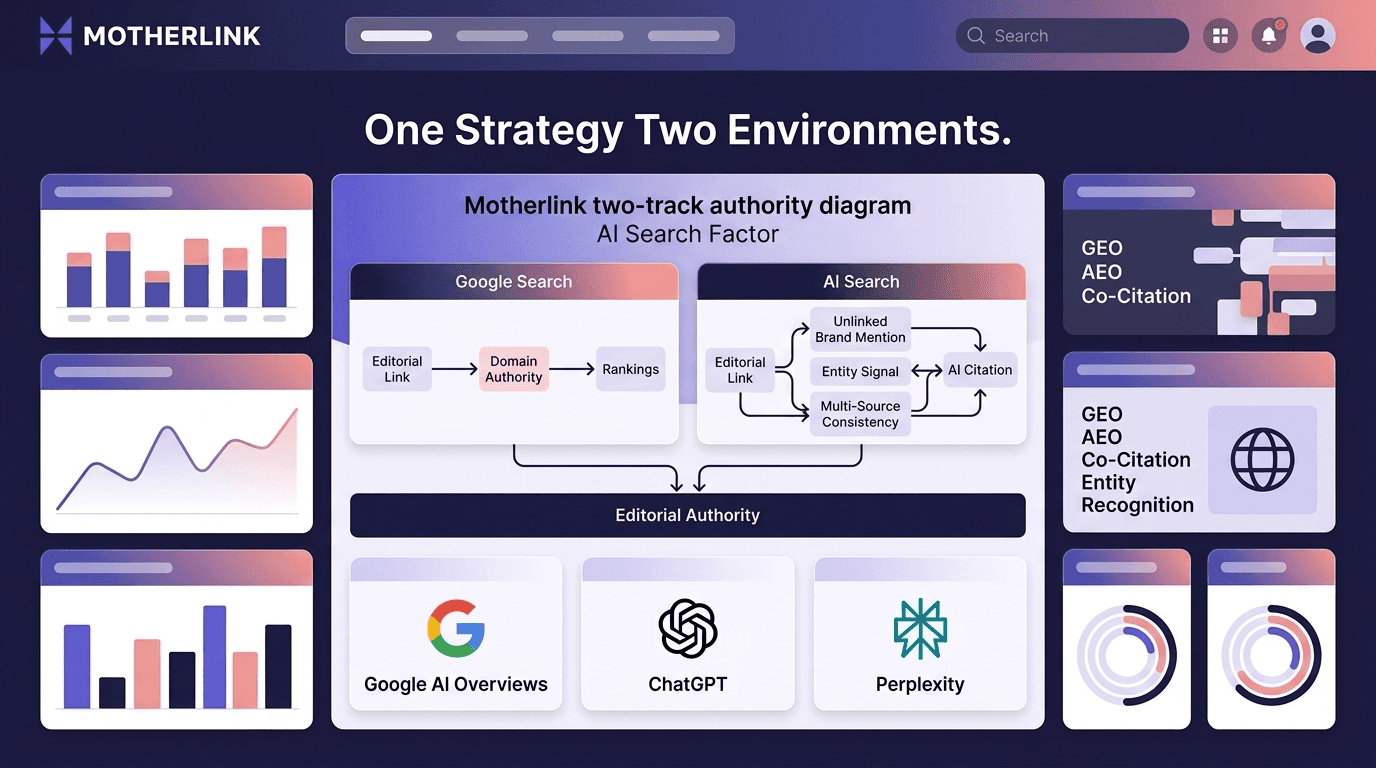
Brand Mentions vs. Backlinks: What AI Engines Actually Look At
AI platforms weigh unlinked brand mentions differently than traditional SEO. Three specific signals matter:
Unlinked mentions. A mention of your brand in a Forbes article, even without a hyperlink, registers as an authority signal for AI platforms. The source's authority transfers regardless of whether a link is present.
Co-citation patterns. When your brand is consistently mentioned alongside recognized authorities in your space, AI systems interpret that as evidence that you belong in that category.
Brand consistency across sources. Inconsistent descriptions and different positioning depending on which site you're reading create a weaker entity signal than consistent, coherent brand messaging across every domain that references you.
Link building and brand PR are no longer separable disciplines. Managing how your brand is described across mentions is as important as securing the placement.
Entity Recognition and Why It Matters for Your Link Strategy
Entity recognition is the process by which AI platforms build a model of what your brand is, what it does, who it serves, and how credible it is. What builds entity recognition:
Consistent brand name usage across all referencing domains
Consistent topical association, referenced in the same subject areas repeatedly
Citation by recognized entities. Associations with authoritative brands strengthen your own entity profile
Presence across multiple source types. News, industry databases, forums, social platforms
A brand appearing in a blog post, a news article, a research citation, a Reddit thread, and a LinkedIn discussion, all describing it consistently, builds significantly stronger entity recognition than the same number of links from a single source type. Building that distributed, consistent presence and optimizing it specifically for AI recognition is where AI SEO services become essential. For brands operating across multiple regions, this requires the localised authority-building that an international SEO strategy is specifically designed to coordinate.
How to Track Your AI Search Visibility and Citations
A practical tracking framework combines three layers:
Layer 1: Brand mention monitoring. Use Ahrefs Alerts, Google Alerts, or Mention to track every instance of your brand appearing across the web. A growing mention footprint across high-authority domains correlates strongly with improving AI citation frequency.
Layer 2: Direct AI answer monitoring. Manually query Google AI Overviews, ChatGPT, and Perplexity using the questions your target customers most likely ask. Track whether your brand appears, where in the answer, and which sources the AI cites. Do this monthly at a minimum.
Layer 3: Entity coverage mapping. Map the topic areas where your brand has the strongest link and mention presence against the queries where you want AI visibility. Gaps between your authority footprint and your target query set show where your link and PR strategy needs to focus next.
Building authority for both Google and AI platforms requires a different kind of strategy than most link-building services deliver. Explore our self-serve backlink platform with advanced filters for topical relevance, page-level traffic, and domain trust signals, plus SEO expert support to help you build the kind of distributed authority profile that performs in both search environments.
What Is E-E-A-T and Why It Still Drives Everything in 2026
E-E-A-T — Experience, Expertise, Authoritativeness, and Trustworthiness — is the evaluative framework Google's quality raters use to assess whether a page deserves to rank. In 2026, E-E-A-T is detectable, measurable, and buildable through a deliberate link and mention strategy. The brands that understand this use it as a competitive lever. The ones that don't wonder why their technically sound content keeps getting outranked by sites that seem to do less.
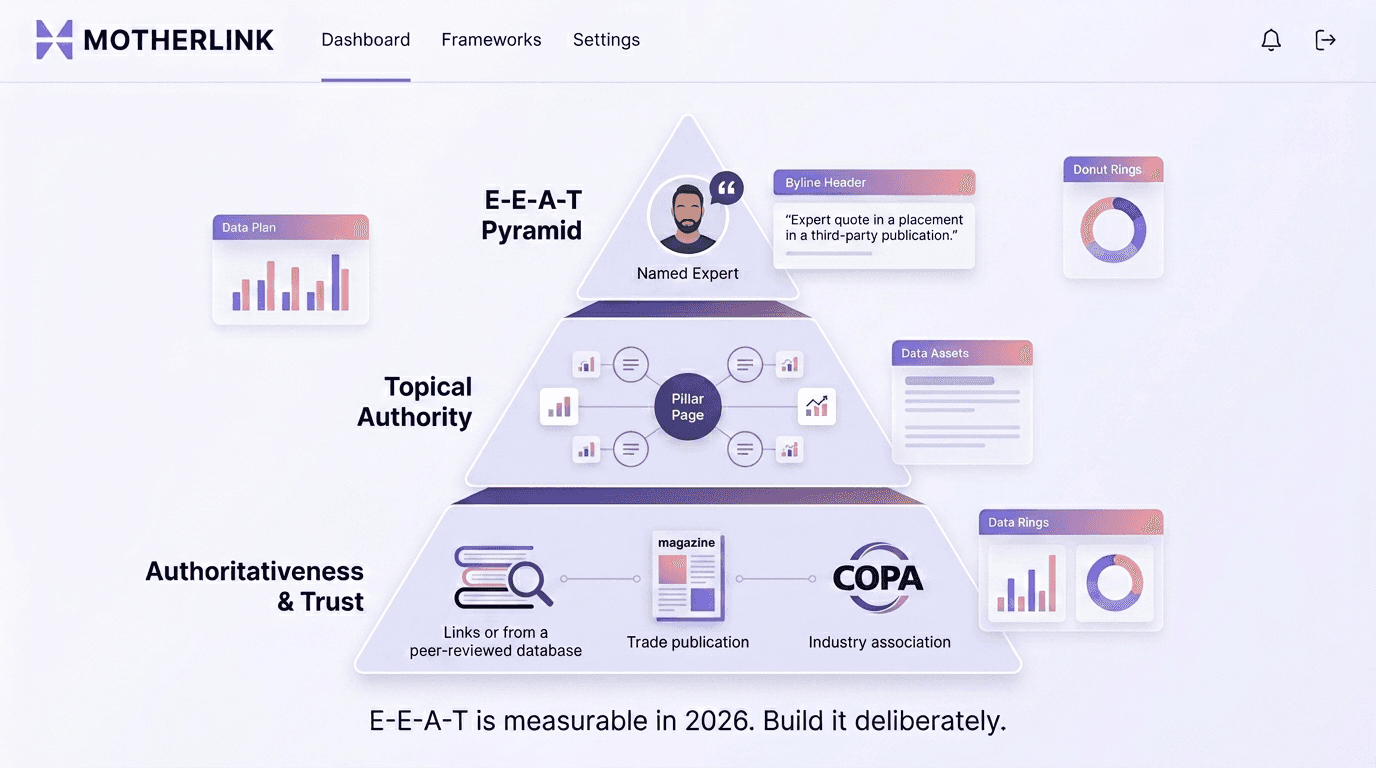
How Backlinks Signal E-E-A-T to Google
Google evaluates the signals left by the broader web's assessment of your brand. Backlinks are one of the most reliable proxies for that assessment.
Why the Source of a Link Matters More Than the Link Itself
When a recognized, authoritative domain links to your content, the domain's own E-E-A-T transfers in part to the linked page. A link from a publication with a long track record of credible, expert content carries more E-E-A-T signal than dozens of links from general-interest or low-authority domains. A link from a peer-reviewed research database, an established trade publication, or a recognized industry association is worth categorically more than a link from a content farm that accumulated DR through its own link schemes.
How to Evaluate a Linking Domain's E-E-A-T Before You Pursue a Placement
Go beyond domain rating. Evaluate:
Named authors with verifiable credentials: identifiable experts, not anonymous "staff writer" bylines
Enforced editorial standards: clear editorial process, correction policy, publishing history
Topical depth and consistency: substantive coverage within a defined subject area
A backlink profile built on merit: editorial references, not link scheme participants
Placements that pass all four checks move E-E-A-T, not just domain metrics.
How to Build Topical Authority Through Link Building
The Mistake Most Brands Make: Page-Level Thinking
Most link-building programs treat acquisition as a page-level activity without considering how links contribute to a coherent topical signal at the domain level. A link to your homepage from a general business publication does less for topical authority in cybersecurity than a link to a specific cybersecurity guide from a cybersecurity-focused publication.
How to Cluster Links Around Topics, Not Pages
Build your link strategy around topic areas, not individual URLs. For each core topic your site needs to own, build a network of links pointing to the full range of content covering that topic, pillar pages, supporting articles, data assets, and tool pages. Each new placement should answer: which topic cluster does this strengthen, and does the linking page's subject matter reinforce that topical association?
A Practical Example: Financial Services
If you want to rank for competitive financial services terms, you need links from financial publications pointing to your financial content — not just links from high-DR domains pointing to your homepage. This niche-specific, topically coherent link architecture separates a strong E-E-A-T signal from a strong-looking backlink report. Working with SEO experts who understand topical mapping alongside link prospecting makes a measurable difference. For brands in finance SEO, YMYL categories mean Google's quality raters apply E-E-A-T criteria with more scrutiny than in almost any other vertical.
The Role of Author Authority in Link Value
Author authority operates at two levels in 2026:
Level 1: The authority of the author on the linking page. A link within an article written by a named expert with verifiable credentials carries a stronger E-E-A-T signal than the same link in an anonymous piece. Author attribution matters, not just the domain.
Level 2: Your own authors being cited externally. When your team members are quoted or referenced as expert sources in third-party content, that external attribution builds author-level E-E-A-T even without a direct backlink. Over time, consistent expert attribution across multiple authoritative sources amplifies the value of every link your domain earns. For brands in heavily regulated verticals like finance, where Google's quality raters apply E-E-A-T criteria most rigorously, author authority building is not optional: it's the difference between competing and not competing.
E-E-A-T is no longer a qualitative aspiration. It is a measurable output of a deliberate link and mention strategy. Trust propagates through networks of links and mentions, not through isolated placements.
E-E-A-T is built through consistent, strategically placed editorial links and mentions, not through volume. If you want an expert assessment of where your current authority profile stands, book a free SEO consultation with our team.
1. Guest Posting (The Evolved Approach)
Guest posting works, but only when treated as a relationship-driven, editorially rigorous content contribution, not a link acquisition shortcut dressed up as content marketing.
How to Find Quality Sites in 2026
The prospecting criteria from 2022 are necessary but no longer sufficient. A placement on the wrong kind of site is worse than no placement at all.
Signal | What to Check | Green Flag | Red Flag |
Organic traffic | Page-level traffic in Ahrefs/Semrush | 1,000+ monthly visits on placement page | Zero or near-zero page traffic despite high DR |
Topical relevance | Subject matter of linking page vs. your content | Same niche, same audience, same topic area | Generic "business", "lifestyle", or multi-topic coverage |
Editorial standards | Named authors, editor bios, and correction policy | Verified authors with professional profiles | Anonymous "staff writer" bylines across all content |
Submission model | How the site acquires content | Selective, editor-led commissioning | Open the "write for us" page, accepting any topic |
Backlink profile | Where the site's own DR comes from | Editorial references, news mentions, niche citations | High outbound link ratio, link scheme participants |
Publishing cadence | Frequency and consistency of new content | Regular publishing driven by audience demand | Irregular bursts of thin content with high outbound links |
Lead With Traffic, Not DR
A DR 45 site with 15,000 monthly organic visitors is a stronger placement than a DR 70 site built primarily to sell guest post slots. Check page-level traffic before pursuing any placement.
Topical Relevance First, Domain Authority Second
The most common mistake in guest posting in 2026. A genuinely on-topic link from a lower-authority site delivers more E-E-A-T signal than a link from a high-DR domain with no topical connection.
The "Write for Us" Red Flag
SpamBrain now treats large-scale guest posting on sites with prominent open submission pages the same as black hat, because the pattern of their outbound link profile matches sites built primarily for link distribution.
What Genuine Editorial Standards Look Like
Named editors with verifiable backgrounds, consistent publishing cadence driven by audience demand, author bios linking to real professional profiles, and visible real readership. Checkable in under ten minutes, and far more reliable than domain metrics alone.
The New Pitch: Lead With Value, Not Just Content
The standard pitch: "I'd love to contribute an article, here are three topic ideas", is filtered on sight. The pitches that get responses lead with something the editor can't easily get elsewhere.
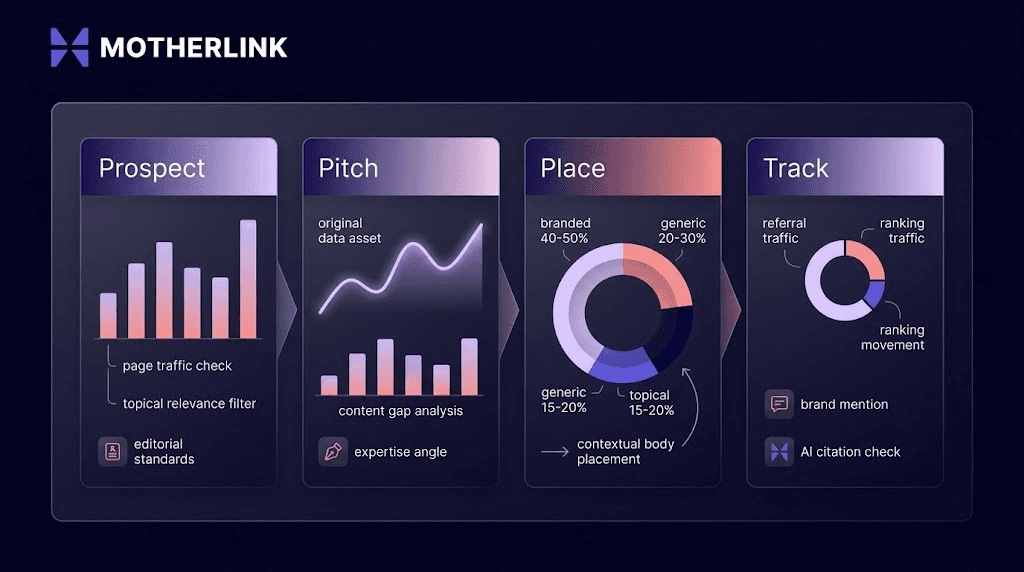
What "Value-First" Actually Means
Original data: a proprietary insight the editor couldn't write without you
A specific gap: evidence that their site is missing coverage of a topic their audience searches for, with a fully formed proposal
An expertise angle: a perspective a generalist writer couldn't credibly provide
The test: would the editor want this pitch even if the link wasn't part of the deal?
Targeting Sites With Outdated Content
One of the highest-converting pitches in 2026: find pages that rank for relevant terms but haven't been updated in 12–24 months. Pitch a comprehensive update. This solves a real problem for the editor and produces a placement within content that is already indexed, trusted, and receiving traffic.
The Follow-Up Sequence
Most placements are not secured on the first touch. Wait 3–5 business days before re-engaging. Each follow-up should add something new, a data point, a timely development, a refined angle, not just ask whether they received your last email.
Anchor Text and Placement Best Practices
The Natural Anchor Distribution
Anchor Type | Example | Recommended Share | Risk if Overused |
Branded | "Motherlink", "Motherlink's platform" | 40–50% | Low |
Generic / navigational | "this guide", "learn more" | 20–30% | Low |
Topical descriptive | "off-page SEO approach" | 15–20% | Low if varied |
Partial match | "link building strategy" | 5–10% | Medium if repeated exactly |
Exact match commercial | "white hat link building services" | <5% | High — SpamBrain targets this |
Placement Within the Content
Links placed within the first two-thirds of an article's body content pass stronger signals than links appended to author bios or dropped in conclusions. The link should add navigational value: a reader who clicks should find exactly what the surrounding text implies.
How Guest Posting Contributes to AI Visibility
Every placement on a credible, topically relevant site is not just a Google ranking signal; it is an AI authority signal. Your brand name within content that AI systems already trust contributes to the multi-source consistency that those systems use to decide which brands to cite. Guest posting diversification matters for AI visibility: five placements across five different publications do more for AI citation frequency than five placements on the same domain.
Guest posting fails when scaled uniformly, same format, same anchor, same pitch, repeated at volume. It succeeds when each placement is a unique editorial contribution to a specific audience.
Guest posting at this standard, genuine editorial contributions, value-first pitching, topical clustering, and anchor strategy takes time and expertise most in-house teams don't have spare capacity for. Our Managed Off-Page SEO Services handle the full workflow: prospect research, pitch development, content creation, placement, and performance tracking.
2. Creating a Linkable Asset
A single well-executed linkable asset can earn more links in six months than a year of outreach-driven guest posting, and keep earning them long after the initial promotion cycle ends. In 2026, linkable assets are also the highest-ROI format for AI citations: structured, data-rich, authoritative content is exactly what AI platforms are trained to surface and reference. But creation without distribution is just publishing.
What Makes a Linkable Asset in 2026
The Core Requirement: Original Value
A linkable asset must offer something that cannot be found by reading existing content:
Original data: survey findings, platform analysis, proprietary research
A proprietary framework: a structured methodology or decision model from genuine expertise
A functional tool: a calculator, generator, or checker that produces a useful output
Comprehensive synthesis: exhaustive treatment that makes every other resource feel incomplete
Simply aggregating existing information rarely earns links at scale. If your asset contains nothing a publisher couldn't find elsewhere, there is no editorial reason to link to it.
What Has Changed Since 2022
A well-designed infographic summarizing publicly available statistics no longer earns links at scale. AI content generation has flooded the web with competent-but-generic synthesis, making original data and proprietary frameworks more valuable by contrast. The assets earning links in 2026 could only have been produced by a brand with direct access to specific data, expertise, or tools.
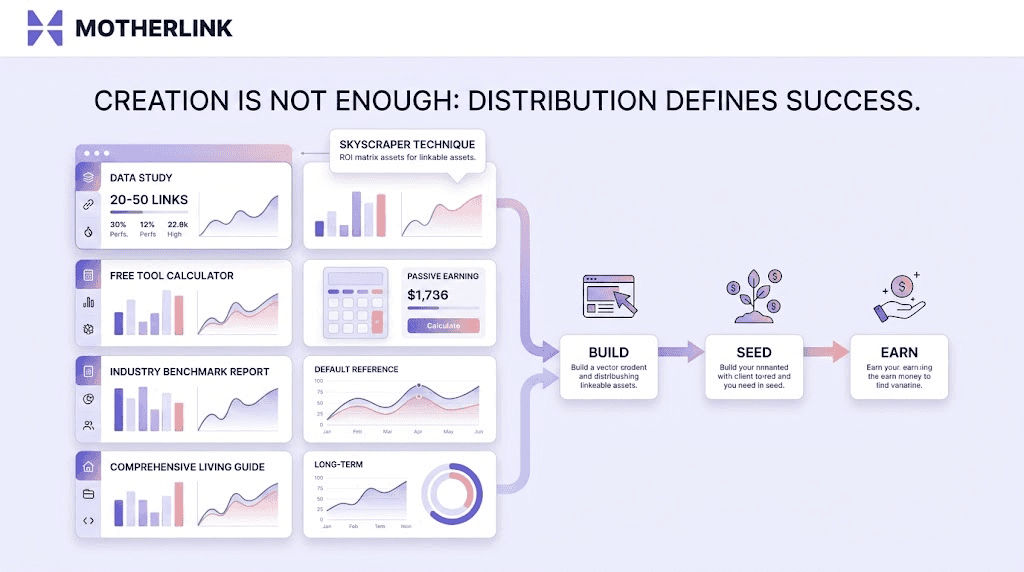
Best Formats That Earn Links Today
Original Research and Data Studies
The highest-performing format. An annual industry survey published with charts and downloadable data becomes a citation source for every piece of content written on that topic for the next 12 months. Extract 5–7 headline statistics and pitch them individually to journalists: each is a separate pitch angle, each angle is a potential editorial placement, each placement cites the full report. A single well-executed data study can generate 20–50 links from this cycle alone.
Free Tools and Calculators
Interactive tools earn links passively because they provide ongoing utility. A well-built calculator or audit tool in your niche becomes a resource that other publishers recommend because it saves their readers time. The investment is front-loaded; the returns compound.
Industry Reports and Benchmark Studies
Annual benchmark reports become default references for anyone writing about industry performance. If your brand publishes the definitive benchmark for your niche, every piece of content on that topic will cite you.
Comprehensive Guides and "Living" Content
In-depth guides earn links over time by becoming the default reference for a topic, but only if updated regularly. A guide last updated in 2023 stops earning links as fresher resources overtake it. Build a content maintenance schedule into your linkable asset program.
What Content Formats AI Engines Tend to Cite
Format Characteristic | Why AI Platforms Prefer It | Practical Implication |
Contains original statistics | Provides citable data points | Include survey data, platform metrics, study findings |
Structured with clear headings | Easier to parse, extract, and attribute | Use logical H2/H3/H4 hierarchy throughout |
Attributes claims to named sources | Increases perceived credibility | Cite methodology, data sources, contributors explicitly |
Answers specific questions directly | Matches AI's answer-synthesis function | Include FAQ sections and direct Q&A formatting |
Referenced by multiple other sources | Multi-source citation is the strongest AI signal | Promote the asset to earn citations from diverse domains |
The Skyscraper Technique: Building What Already Earns Links
Find content that has already earned a strong backlink profile on your target topic, build a demonstrably better version, and reach out to sites already linking to the original.
How to Execute It
Identify the target: Use Ahrefs Site Explorer to find pages with 20+ referring domains for your target keyword
Diagnose the gaps: Outdated data, missing subtopics, lack of original research, shallow treatment
Build something substantively better: The improvement must be genuine, not cosmetic. A longer word count is not a skyscraper
Systematic outreach: Contact sites linking to the original, explaining specifically what your version adds. Conversion rate is meaningfully higher than cold outreach because the sites have already demonstrated willingness to link on this topic
Designing Your Asset for Readability
The non-negotiables:
Clear, descriptive headings at every level. A publisher scanning to decide whether to cite should understand the full scope from headings alone
Data visualizations for every key finding. Charts and tables make statistics citable in a way that prose statistics are not
A dedicated "key findings" section. Most citable data points are formatted for easy extraction
Mobile-optimized design. Assets difficult to read on mobile are shared less and earn fewer links
How to Promote Your Linkable Asset
Outreach to Relevant Publishers
Build a target list of publishers who have linked to similar assets in the past. Use Ahrefs to find sites that have linked to comparable content, then reach out with a personalized pitch explaining what your asset adds.
Digital PR for Data-Led Assets
Identify the 3–5 most newsworthy statistics and build individual pitch angles. A single successful digital PR placement from a data study can drive 5–10 secondary links as other publishers pick up the covered story.
Paid Promotion to Accelerate Initial Velocity
Paid distribution through LinkedIn Ads or targeted social promotion accelerates the initial visibility spike that triggers organic sharing and linking. The goal is to get the asset in front of the publishers most likely to cite it organically.
Using AI Tools to Build Assets Faster
AI tools accelerate structural scaffolding, formatting, and synthesis, but cannot replace original data or proprietary expertise. Use AI to produce faster; use your brand's unique data to produce something worth linking to.
If you'd rather start earning links while your asset strategy develops, our self-serve backlink platform gives you direct access to vetted, relevant placements with full control over targeting, anchor strategy, and quality filters backed by SEO expert support at no extra cost.
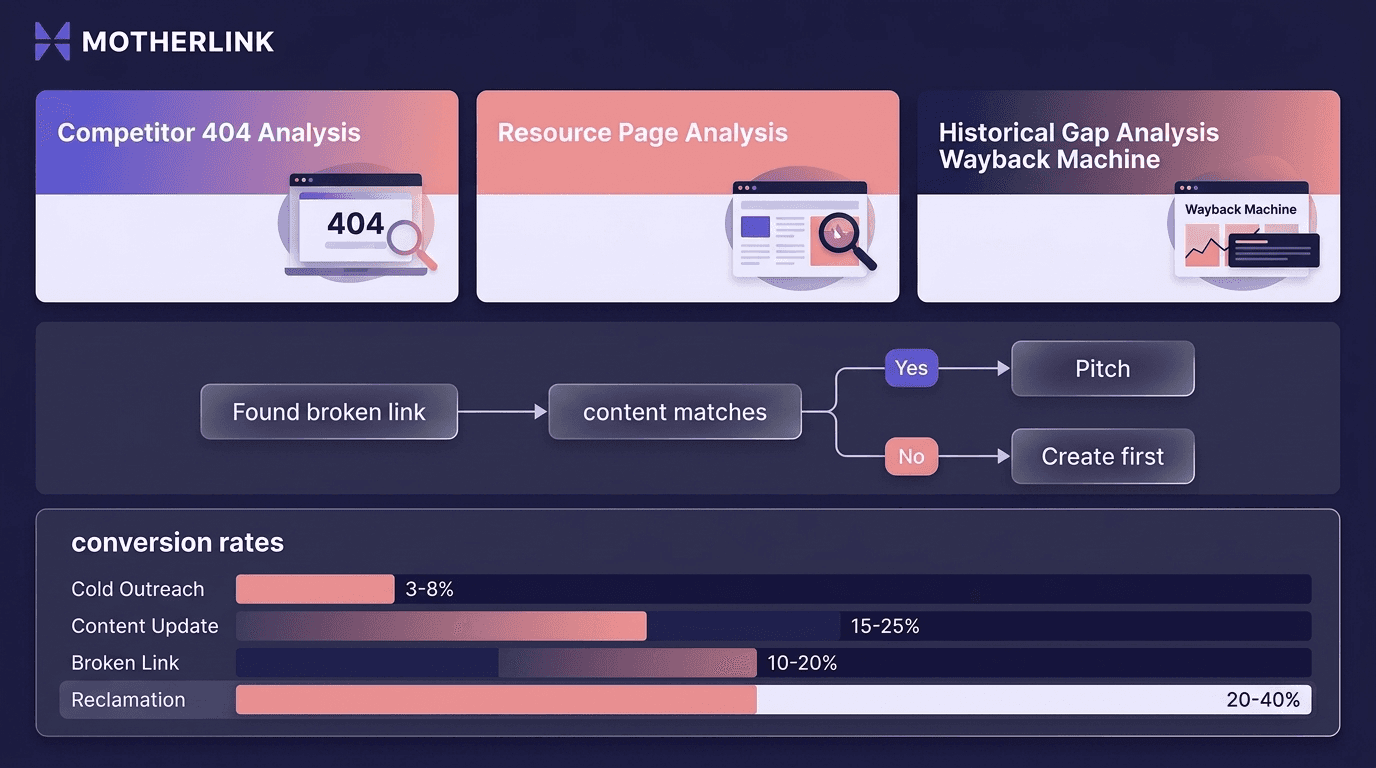
3. Broken Link Building
Broken link building works because you are not asking for a favor; you are solving a problem the webmaster already has. A broken link is a bad user experience, a crawl signal issue, and an editorial embarrassment. When you identify it and arrive with a credible solution, outreach converts at a meaningfully higher rate than any cold pitch.
How to Find Broken Link Opportunities Using Ahrefs
Method 1 — Competitor Backlink Analysis
The most efficient starting point. In Ahrefs: open Site Explorer → enter a competitor's domain → Backlinks → filter by "404 not found" → export → filter for pages with meaningful DR and traffic → cross-reference against your existing content for direct replacement matches.
Method 2 — Resource Page and Topic Hub Analysis
In Ahrefs: use Content Explorer to search [topic] + "resources" or [topic] + "useful links" → filter for DR 40+ with organic traffic → run each page through Ahrefs' broken link checker or the Check My Links browser extension → match broken links against your content library.
Method 3 — Historical Content Gap Analysis
Use Ahrefs' Best by Links report filtered for 404 pages across relevant domains → check the Wayback Machine to understand what the original page covered → assess whether your brand can create a credible replacement → build the content → pitch every site that was linking to the original.
Link Reclamation as a Parallel Tactic
Link reclamation finds live mentions of your brand that are not linked and asks for the link to be added. The conversion logic is stronger than broken link building: the author has already referenced your brand and already considers you relevant.
How to Find Unlinked Brand Mentions
Ahrefs Mentions report: track references to your brand name across the web
Google Alerts or Ahrefs Alerts: set up for brand name, product names, and founder names
Why Reclamation Converts Better Than Most Outreach
Outreach Type | Typical Response Rate | Conversion Logic |
Cold outreach (new placement) | 3–8% | Asking for something with no prior relationship |
Broken link building | 10–20% | Solving a problem the webmaster already has |
Link reclamation | 20–40% | Completing a reference the author already made |
Content update pitch | 15–25% | Improving something the site has already invested in |
How to Write a Winning Outreach Pitch
The Core Structure
Specific identification of the problem: name the exact broken link, anchor text, dead URL, and location on the page. Vague references signal mass outreach
Brief credibility establishment: one sentence on why your replacement content is credible
The replacement offer: direct link with a one-sentence explanation of why it serves the same purpose and goes further
A frictionless ask: "If it's a fit, feel free to swap the link"
What to Avoid
Pitch Element | Wrong Approach | Right Approach |
Opening line | "I was browsing your site and noticed..." | "I found a broken link on [specific page title]..." |
Length | 4+ paragraphs explaining your brand | 3–4 sentences total |
Tone | Formal, corporate, template-obvious | Direct, specific, genuinely helpful |
The ask | "Would you be open to a collaboration?" | "Feel free to swap the link if it's a fit" |
Follow-up | No follow-up, or immediate second ask | One follow-up after 5 business days, adding context |
Broken link building and link reclamation are among the highest-converting tactics available, but running them properly requires systematic prospecting and personalized outreach at scale. Our self-serve backlink platform gives you the filters, data, and expert support to execute without the overhead of a full agency engagement.
4. Resource Page Link Building
A resource page is a curated collection of links maintained for the benefit of an audience, the best tools in a niche, the most useful guides on a topic, the recommended reading list for a professional community. A link from a well-maintained resource page is editorially curated by definition. Resource page links from authoritative niche sites, academic institutions, and professional associations carry E-E-A-T weight that few other link formats match.
How to Find Resource Pages
Search Operator Strings That Work
Search Operator | What It Finds | Best Used For |
| General resource collections | Broad niche prospecting |
| Tool-focused resource pages | SaaS, software, platform brands |
| Academic and editorial resource lists | Research-heavy or B2B niches |
| Community-maintained link collections | Forums, associations, niche communities |
| Pages with "resources" in the URL | High-intent resource page identification |
| University and academic resource pages | Highest-trust link opportunities |
| Association and non-profit resource pages | Professional authority niches |
Competitor Backlink Analysis for Resource Pages
In Ahrefs, open a competitor's backlink profile and filter by page title containing "resources", "links", or "tools". Every resource page linking to a competitor is a page where you have a credible reason to request inclusion.
Niche Hub and Association Mapping
Map the institutional landscape of your niche: associations, certification bodies, and academic departments. A link from a recognized professional association's resource page carries more E-E-A-T signal than most DR 80 editorial placements.
How to Get Listed
The Core Qualifying Question
Before drafting any outreach: does this resource page's audience genuinely need what we've built? If your content is a free tool, comprehensive guide, or original data study, the answer is likely yes. If it's a commercial landing page dressed as a resource, no amount of pitch refinement will change that.
Pitch Structure for Resource Page Outreach
Pitch Component | What to Include | What to Avoid |
Subject line | Reference the specific resource page by name | Generic "link suggestion" or "partnership opportunity" |
Opening | Name the specific page and explain why you find it valuable | Flattery without specificity |
The proposition | What your resource is and what gap it fills for their audience | Leading with your brand credentials |
The content itself | Direct link with a one-sentence description | Asking them to explore your site to find it |
The ask | "If it's a fit for your audience, I'd love for you to consider adding it" | "I'd appreciate a link back to our site" |
Length | 4–6 sentences total | Anything longer than 150 words |
Relevance Over Domain Authority. Every Time
A link from a perfectly relevant niche resource page at DR 35 outperforms a generic high-DR resource page with no topical connection. Sort your prospect list by topical relevance and audience quality first, domain authority second.
Following Up and Maintaining the Relationship
Follow up once, after 5–7 business days, with a brief addition of value. After two unanswered contacts, move on. A webmaster who lists your resource is someone who has publicly vouched for your content — that relationship creates future opportunities for collaborative content, community introductions, and referrals to other resource page maintainers.
Resource Pages and AI Visibility
When an AI platform encounters a curated resource page from an authoritative source, it reads the page as a trust signal for every resource listed on it. Multi-source curation, different authoritative voices independently deciding your resource belongs on their list, is one of the clearest multi-source consistency signals AI platforms are designed to detect.
Resource page link building at scale requires systematic prospecting and outreach that prioritizes the curator's audience over your link goals. Book a free consultation to map the right approach for your niche.
Digital PR and Journalist Outreach
Digital PR is the dominant link-building strategy of 2026. A successful campaign earns editorial links from publications that would never accept a traditional outreach pitch, generates brand mentions that contribute to AI visibility, and builds third-party credibility that transfers directly to E-E-A-T signals. It is the only tactic that simultaneously moves all four components of the authority ecosystem: backlinks, brand mentions, entity recognition, and AI citations.
48.6% of SEO professionals now rank digital PR as the single most effective link acquisition tactic. 67.3% of marketers use it as their primary link-building approach.
What Happened to HARO?
In 2024, Cision discontinued HARO, a single, centralized platform the entire industry had built workflows around. What replaced it was a fragmented landscape of more specialized platforms. This raised the barrier to entry for reactive digital PR but reduced the saturation problem: journalists on newer, smaller platforms receive fewer responses per query, which means well-crafted pitches stand out more.
Best Journalist Outreach Platforms in 2026
Platform | Best For | Response Speed Required | Link Quality |
Qwoted | B2B, finance, technology, professional services | Medium — hours to days | DR 50–80+ |
Featured | Expert commentary, thought leadership | Medium — same day | DR 40–70 |
Source of Sources | Academic, research, specialist expert commentary | Lower — days acceptable | DR 60–90+ |
#JournoRequest (X) | Breaking news, fast-turnaround commentary | High — under 1 hour | Variable |
Connectively | General editorial, lifestyle, business | Medium — same day | DR 30–60 |
Direct outreach | Tier 1 publications, exclusive data | High — relationship-dependent | DR 70–90+ |
Reactive PR vs. Proactive PR — Understanding the Difference
Reactive PR
Monitor journalist query platforms, respond quickly when relevant opportunities appear. Low asset investment, consistent opportunity flow, ability to earn links from publications you couldn't approach cold. The limitation: you are responding to the media's agenda, not setting your own.
Proactive PR
Develop original assets — data studies, surveys, proprietary analyses — and pitch them to target journalists as exclusive story angles. You control the topic, the angle, and the target publications. A single well-executed proactive campaign can generate 15–30 links from high-authority domains. The limitation: meaningful upfront investment in research and production.
The most effective programs run both simultaneously. Reactive PR generates a consistent baseline. Proactive PR delivers the high-authority spikes that move domain-level metrics.
HARO vs. Current Landscape Compared
Factor | HARO (2022) | Current Landscape (2026) |
Platform structure | Single inbox, all niches | Multiple specialized platforms |
Response competition | Extremely high | Lower — more specialized audiences |
Response window | 24–48 hours typically | 1–24 hours depending on the platform |
Link quality ceiling | Variable DR 20–90+ | Higher on specialized platforms |
Setup requirement | Single account | Multiple accounts + monitoring |
How to Write a Pitch That Gets Picked Up
The Structure of a High-Converting Pitch
Line 1. The credential. Why are you qualified to comment on this specific topic? "I've run link-building campaigns for 50+ SaaS companies over eight years" is a credential. "I'm the CEO of a digital marketing agency" is not.
Line 2. The insight. Your actual response, stated directly. Lead with the most useful point.
Lines 3–4. Supporting detail. Specific numbers, named examples, verifiable claims.
Line 5. The offer. Available for follow-up, contact details. Nothing more.
Pitch Length and Format
Pitch Element | Optimal Approach | Common Mistake |
Total length | 100–150 words maximum | 300+ word essays |
Opening | Lead with your most useful insight | Lead with your company background |
Data | Specific numbers and named examples | Vague claims without evidence |
Tone | Direct, confident, collegial | Formal, deferential, or salesy |
Format | Plain text, no attachments on first contact | HTML email, PDFs, press releases |
Timing | Within 2 hours of query posting | Next-day responses |
Setting Up Alerts to Track Your Mentions
Ahrefs Alerts: brand name, product names, founder names
Google Alerts: secondary layer for mentions Ahrefs misses
Mention or Brand24: real-time monitoring across news, social, and forums
Manual AI platform checks: query Google AI Overviews, ChatGPT, and Perplexity monthly
Set these up before any campaign launches. Coverage appearing without a link is a reclamation opportunity.
How Digital PR Drives AI Citation and Brand Visibility
When an AI platform decides which brands to cite, it draws on the same signals digital PR builds: editorial coverage from trusted publications, consistent brand mentions, and topical association with the subject matter. A brand covered by ten high-authority publications on a given topic has a significantly stronger AI citation profile for that topic than a brand with the same DR but no editorial coverage. For brands in competitive niches like finance SEO, legal, and healthcare, digital PR is not one tactic among many; it is the foundational authority-building mechanism.
Newsjacking and Data-Led PR as Link and Citation Magnets
Newsjacking
Inserting your brand's expert perspective into a breaking news story while it is still being actively covered. A brand providing credible, specific commentary within hours of a story breaking earns coverage that a perfectly crafted cold pitch sent three weeks later never will. Brands that have already built journalist relationships through reactive PR have a significant advantage. A journalist who has cited you before is far more likely to reach out directly when a relevant story breaks.
Data-Led PR
Instead of responding to the news cycle, create one. The anatomy of a successful data-led PR campaign:
A research question with a non-obvious answer
A credible methodology defensible under scrutiny
A 3–5 headline statistics, each a standalone pitch angle
A visual asset journalists can embed or reference
A targeted media list of journalists who have covered similar research
A single well-executed data-led PR campaign can generate 20–50 editorial links, dozens of unlinked brand mentions, and a citation footprint that AI platforms reinforce over months.
Digital PR at this level is a full-time discipline, not a part-time outreach task. Our Managed Off-Page SEO Services include end-to-end digital PR campaign management: research design, asset production, media list building, pitch development, and mention monitoring.
6. Niche Edits (Link Insertions)
Niche edits have accumulated a bad reputation because of their association with paid link schemes. That version is black hat. But the underlying mechanic of inserting a contextually relevant link into an already-published, already-ranking page is one of the most efficient tactics available when executed correctly. You are placing a link within content that is already indexed, trusted, and receiving traffic. The authority transfer is immediate.
The distinction between white hat and black hat niche edits comes down to one question: Is the link genuinely useful to the reader of that page?
How Niche Edits Work
Why Existing-Page Links Pass Authority Faster
A link on a page that is already indexed, ranking, and receiving organic traffic passes authority immediately: no crawl delay, no sandbox period. A niche edit on a DR 45 page with 3,000 monthly visitors often produces faster ranking movement than a guest post on a DR 60 domain with a newly published article that has yet to accumulate its own authority signals.
The Three Types of Niche Edit Opportunities
Type | Description | Best Suited For | Risk Level |
Organic editorial addition | Webmasters add your link because it genuinely improves their content | Tools, data assets, and comprehensive guides | Lowest — fully editorial |
Relationship-based insertion | Link added via outreach to a site you have an existing relationship with | Any content format | Low — relationship-validated |
Cold outreach insertion | Link added via targeted cold outreach to a relevant publisher | High-value content with clear audience benefit | Medium — depends on execution quality |
How to Find Niche Edit Opportunities
Competitor Backlink Gap Analysis
In Ahrefs: use the Link Intersect tool to find domains linking to two or more competitors but not to you → filter by topical relevance and page-level traffic → identify pages where your content would be a natural contextual addition → prioritize pages already ranking for terms related to your content.
Content Gap Prospecting
Identify published pages that cover a topic your content expands on, but don't currently link to you. Search for: pages referencing statistics, your research updates, roundup articles omitting your brand, and how-to guides that would benefit from linking to a more detailed resource you've published.
Quality Filters Before Any Outreach
Quality Signal | Minimum Standard | How to Check |
Page organic traffic | 500+ monthly visits on the target page | Ahrefs Site Explorer — page-level traffic |
Topical relevance | Direct subject matter overlap | Manual review of page content |
Domain trust | Clean backlink profile, no penalty history | Ahrefs domain overview |
Outbound link ratio | Not excessive — page shouldn't be a link dump | Manual review |
Editorial context | Clear natural insertion point for your link | Manual review of content structure |
How to Do It Safely Without Violating Google's Guidelines
What Google's Guidelines Actually Say
Google prohibits links "created primarily for search engine rankings" rather than for genuine editorial value. A niche edit where the link genuinely helps the reader passes the standard. The practical test: would the webmaster add the link even if it produced no SEO benefit, or is it purely because it improves their content?
The Editorial Fee Gray Area
Sites charging a fee to review and potentially insert a link are a gray area. The relevant factors: does the site have genuine organic traffic and editorial standards independent of link selling? Does the publisher retain the right to decline? Is the link marked rel="sponsored" if payment is involved? If the site accepts any insertion from anyone willing to pay, it is a link farm regardless of how the fee is framed.
Page-Level Relevance Is Non-Negotiable
Page-level relevance is not one factor among many. It is the threshold factor. If the page isn't topically relevant to your content, no other quality signal makes the placement worthwhile.
Niche Edits vs. Other Link Formats: When to Use Each
Format | Best Used When | Relative Speed | Authority Transfer | Compliance Risk |
Niche edits | Strong existing content on relevant ranking pages | Fast | Immediate | Medium — depends on execution |
Guest posts | Building new topical authority on target domains | Slow | Delayed — weeks to months | Low if editorial standards met |
Broken link building | Replacing lost content with genuine improvement | Medium | Fast | Lowest |
Digital PR | Earning Tier 1 editorial links at scale | Slow | Strong | Lowest |
Resource pages | Curated reference inclusion for tools and guides | Medium | Strong | Lowest |
Finding niche edit opportunities that meet a genuine editorial standard is the most time-intensive part of the process. Our self-serve backlink platform gives you access to a vetted publisher inventory with advanced filters for topical relevance, page-level traffic, and domain trust signals.
7. Listicle Link Building
Listicles — "best X tools", "top Y platforms", "X alternatives to Z" — are one of the most commercially valuable link formats in 2026 and one of the most overlooked as a deliberate target. They are high-intent, comparison-stage content that sits directly in the decision path of buyers. A link from a well-ranking listicle simultaneously passes authority to your domain, puts your brand in front of an audience actively evaluating options, and contributes to the co-citation pattern AI platforms use to build entity profiles.
How to Find Relevant Listicles in Your Niche
SERP-Based Prospecting
Run these queries in Google and map every listicle ranking in the top 10:
"best [product category] tools"
"top [product category] platforms"
"best [product category] software"
"[competitor name] alternatives"
"best [product category] for [use case]."
Record URL, domain, DR, estimated traffic, and whether your brand is currently included.
Competitor Backlink Analysis
In Ahrefs, pull backlink profiles of your two or three closest competitors and filter for pages with "best", "top", or "alternatives" in the title or URL. Every listicle linking to a competitor but not to you is a direct prospecting target.
Prospecting Method | What It Finds | Best Tool | Priority Signal |
SERP analysis | High-traffic, actively ranking listicles | Google + Ahrefs | Ranking position + estimated traffic |
Competitor backlinks | All listicles linking to competitors | Ahrefs Link Intersect | Referring domain authority + topical match |
Brand mention monitoring | Listicles mentioning you without a link | Ahrefs Alerts + Google Alerts | Immediate reclamation opportunity |
Content Explorer | Listicles published in your niche by date | Ahrefs Content Explorer | Recency + traffic + DR |
Monitoring for Existing Unlinked Mentions
Before any outreach, check whether your brand is already mentioned in listicles without a link. A brief email asking them to add the URL converts at a significantly higher rate than any cold inclusion pitch. Action reclamation outreach within 48 hours; editors are most receptive when content is freshly published.
How to Pitch to Get Your Brand or Tool Included
Frame as an Upgrade, Not an Addition
The highest-converting pitch positions your brand as an improvement to the existing list. Before pitching, identify:
Is there a tool on the list that has declined in quality or shut down?
Is there a use case that the list serves poorly that your brand addresses more effectively?
Has the list not been updated recently?
Any of these is a stronger angle than "I'd like to suggest adding our tool."
The Pitch Structure
Pitch Component | What to Include | What to Avoid |
Subject line | Reference the specific listicle by title | "Partnership opportunity" or "collaboration request" |
The angle | Why your brand improves the list | "We'd love to be featured" |
The differentiator | One specific, verifiable thing your brand does better | A list of all your features |
Social proof | A credible third-party reference or data point | Self-reported claims |
The ask | "Would you consider adding [brand] to [specific section]?" | "Can you add a link to our site?" |
Length | 100–120 words maximum | Anything longer |
Why Listicle Mentions Help AI Engines Recognise Your Brand
Co-Citation and Category Recognition
When your brand is consistently listed alongside the same recognized competitors across multiple listicles, AI platforms read that as co-citation evidence as a confirmation that your brand belongs in that category. Being included in listicles that also feature your most recognized competitors is more valuable for AI visibility than being included in listicles where you are the only recognized brand.
Listicles as AI Recommendation Sources
AI platforms, particularly ChatGPT and Perplexity, frequently cite listicle content when answering recommendation queries. Being consistently included in the top-ranking listicles in your category is a direct input into the AI recommendation layer, creating a compounding effect: better traditional rankings → more brand visibility → stronger AI citation frequency.
Listicles influence both the user making a purchase decision in traditional search and the AI system synthesizing a recommendation in generated search.
8. Community and Forum Link Building
Community link building done wrong: create accounts on Reddit and Quora, drop links wherever a vaguely relevant question appears, repeat until banned. Done right, it looks nothing like that.
The correct frame is not "link building through communities." It is "building genuine presence in the communities your audience inhabits, and earning links, mentions, and AI citations as a byproduct." Community link building is a long-term brand authority play, not a short-term link acquisition tactic.
Reddit SEO: Indirect Benefits and How to Use It Properly
Reddit has undergone a significant authority shift. Google's increased indexing of Reddit content has made Reddit threads a regular feature in search results for informational, comparison, and recommendation queries. For many commercial keywords, a Reddit thread now outranks dedicated review sites.
How Reddit Links Actually Work
Reddit links are nofollow by default, so direct PageRank transfer is limited. The indirect value operates through three mechanisms:
Mechanism | How It Works | SEO/Authority Value |
Referral traffic | Users click through from Reddit threads | Direct traffic signal — Google reads engagement |
Content amplification | Reddit exposure increases the likelihood of content being found and linked by publishers | Secondary link earning from increased visibility |
AI citation source | Reddit threads are increasingly used as AI sources | Direct AI visibility contribution |
The Right Way to Build Reddit Presence
Establish a genuine account history first. 90 days of genuine community participation before any brand-adjacent activity
Answer questions completely, without requiring a click. Provide the full answer within the thread, with a link to further reading for those who want it
Let others reference your brand. Organic recommendations from genuine users earn stronger AI citation signals than any self-posted link
Engage in niche subreddits. A niche subreddit with 15,000 engaged professionals is worth more than r/entrepreneur with 3 million members and a near-zero signal-to-noise ratio
Reddit's Growing Role in AI-Generated Answers
Reddit threads are particularly highly upvoted threads in established subreddits that provide the multi-perspective, experience-based content AI systems interpret as authentic user evidence. A Reddit thread where your product is genuinely recommended by real users contributes to your AI citation profile in ways that are difficult to manufacture and relatively easy to earn through a genuine product and genuine community engagement.
LinkedIn as an Underutilized Authority Signal
LinkedIn is the most underutilized community platform in link-building strategy. Google indexes LinkedIn content extensively. AI platforms treat it as a high-credibility source for professional and B2B topics.
How LinkedIn Builds Link and Citation Signals
LinkedIn articles and posts: indexed by Google, cited by AI platforms. A consistent publishing cadence attributed to named professionals builds author authority signals that amplify the value of every link your domain earns
LinkedIn group engagement: builds relationships with the editors, journalists, and publishers who are also members are the organic precursors to guest posting opportunities and digital PR citations
LinkedIn as a distribution channel: when your brand publishes original research, LinkedIn is the highest-signal distribution channel for reaching the professional audience most likely to cite your findings
Podcasts and Webinars as Link-Earning Formats
A single podcast appearance typically generates links from: the show notes page, podcast directories, partner promotion, transcript pages, and audience republication. Each is a separate link source from a single engagement.
How to Identify the Right Podcasts and Webinars
Signal | What to Look For | How to Check |
Show notes quality | Detailed notes with active outbound links | Review 3–5 recent episodes manually |
Episode indexing | Show note pages indexed by Google | Site:podcastdomain.com in Google |
Host audience overlap | Listeners match your target professional audience | Review guest roster and topic history |
DR of podcast domain | Minimum DR 30 for meaningful authority transfer | Ahrefs domain overview |
Niche Forums and Q&A Sites Worth Targeting
Platform Type | Best Niches | Link Value | AI Citation Value |
Industry-specific forums | Technology, finance, legal, and medical | Medium — often dofollow | High |
Stack Overflow / Stack Exchange | Development, data, technical SEO | High — indexed, high-DR domain | High — heavily cited by AI for technical queries |
Quora | Consumer topics, broad professional queries | Low — declined significantly since 2022 | Medium |
GitHub discussions | Developer tools, open source, technical products | High — strong domain authority | High |
Product Hunt | SaaS, apps, tools | Medium | Medium |
Indie Hackers | SaaS, bootstrapped products, growth | Medium | Medium |
Quora's value has dropped significantly since 2022. Stack Overflow and Stack Exchange, by contrast, have maintained and in some cases increased their authority, particularly for technical queries.
Every community platform operates on the same principle: genuine contribution earns visibility; visibility earns links and citations. There is no shortcut version.
Building a Natural Link Profile: Combining All Tactics
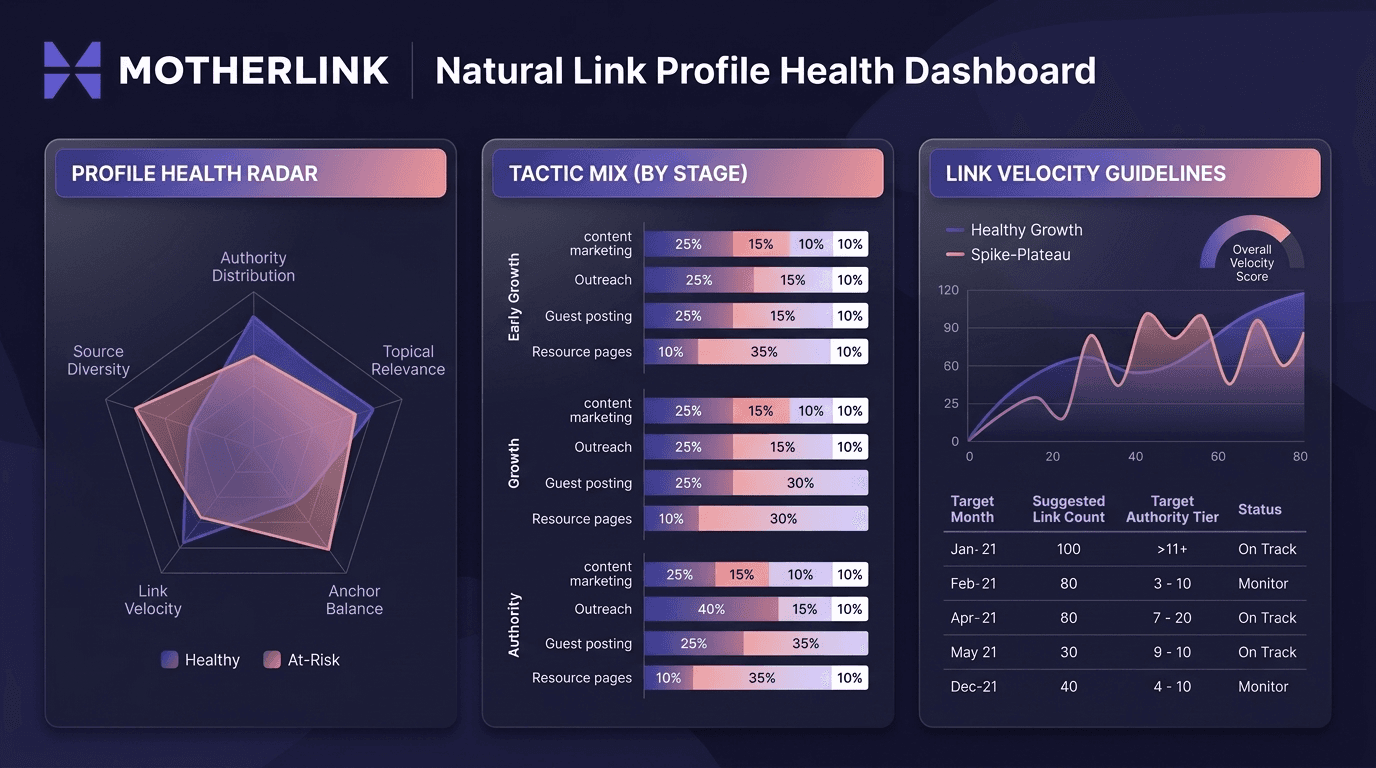
A link profile built entirely from one source type, regardless of individual quality, looks unnatural to Google's pattern detection. A natural link profile in 2026 is the deliberate result of running multiple tactics in parallel, across multiple source types, at a cadence that reflects how a genuinely authoritative brand accumulates links over time.
How to Audit Your Current Link Profile
A link audit should run quarterly at a minimum, and immediately following any significant algorithm update or ranking shift.
The Four Dimensions of a Link Profile Audit
Dimension 1. Authority distribution. A natural profile has a bell curve distribution: a long tail of lower-DR links, a strong mid-range, and meaningful high-authority placements from digital PR and editorial content.
Dimension 2. Topical relevance distribution. A profile with significant off-topic links is a pattern that modern spam detection reads as acquisition-motivated. Use Ahrefs' topical relevance indicators alongside manual spot-checking.
Dimension 3. Anchor text distribution. Map against the healthy model: 40–50% branded, 20–30% generic, 15–20% topical descriptive, 5–10% partial match, under 5% exact match commercial. Significant deviation — especially overrepresentation of exact match anchors is a risk flag.
Dimension 4. Link velocity pattern. The pattern should show steady, consistent growth with natural variation, not flat lines punctuated by artificial spikes.
Identifying and Managing Toxic Links
Action | When to Use It | How |
Ignore | Low-DR, no-traffic domains with minimal profile impact | No action required if volume is low |
Request removal | Identifiable webmaster, recent placement | Direct email to the site owner or the contact page |
Disavow | Persistent toxic links, no identifiable webmaster | Google Search Console Disavow Tool — domain-level preferred |
Over-disavowing is as damaging as under-disavowing.
Competitor Backlink Gap Analysis
In Ahrefs, the Link Intersect tool surfaces domains linking to multiple competitors but not to you — the highest-priority prospecting targets. Run this analysis against your top three organic competitors quarterly.
Competitor Gap Analysis Step | Tool | Output |
Identify top competitors | Ahrefs Organic Competitors report | Domains competing for the same keyword set |
Find linking domains you're missing | Ahrefs Link Intersect | Domains linking to 2+ competitors but not you |
Assess topical relevance | Manual review | Prioritized prospect list |
Identify content gaps | Ahrefs Content Gap | Topics competitors rank for that you don't cover |
Map to tactic type | Manual assessment | Guest post / niche edit / digital PR / resource page |
The Right Mix of Tactics for 2026
The Framework by Business Stage
Business Stage | Primary Focus | Secondary Focus | Avoid |
Early stage (DR 0–30) | Linkable assets + broken link building + resource pages | Guest posting on relevant niche sites | Digital PR — ROI is low until base authority is established |
Growth stage (DR 30–50) | Guest posting + niche edits + digital PR (reactive) | Linkable assets + listicle inclusion | Over-reliance on any single tactic type |
Authority stage (DR 50+) | Digital PR (proactive) + linkable assets | Niche edits + community authority | Volume-based tactics that dilute profile quality |
The Tactic Mix by Percentage
Tactic | Profile Share | Primary Value | Secondary Value |
Digital PR | 30% | High-authority editorial links | AI citations + brand mentions |
Linkable assets | 25% | Passive link earning at scale | AI citation + topical authority |
Guest posting | 20% | Topical authority building | Relationship development |
Brand mentions + reclamation | 15% | Entity recognition + AI visibility | Link conversion from existing mentions |
Niche edits + resource pages + broken links | 10% | Gap filling + quick authority transfer | Topical relevance reinforcement |
Link Velocity — Building at a Natural Rate
Business Stage | Target Monthly New Referring Domains | Acceptable Spike Threshold |
Early stage (DR 0–30) | 5–15 | Up to 2x monthly average |
Growth stage (DR 30–50) | 15–40 | Up to 1.5x monthly average |
Authority stage (DR 50+) | 30–80 | Up to 1.3x monthly average |
Spikes above these thresholds, particularly when linking domains that share structural characteristics, are detectable as campaign patterns. Distribute placements consistently across the month rather than front-loading campaign deliveries.
How a Diverse Link Profile Supports AI Visibility
Why Diversity Strengthens Entity Recognition
A brand referenced in a news article, a niche blog post, a Reddit thread, a podcast show note, a resource page, and a research citation all consistently described has a significantly stronger entity profile than a brand with the same number of total links concentrated on a single source type.
The Entity Consistency Requirement
Diversity of source is necessary but not sufficient. If your brand is described differently depending on where it appears, AI systems build a fragmented entity profile that reduces citation confidence. Before scaling any link-building program, define the core entity descriptors your brand needs to be consistently associated with: topic areas owned, problems solved, audience served, and credentials establishing expertise.
Entity Signal | How to Build It | How to Measure It |
Consistent brand description | Standardized brand description in all outreach and author bios | Manual audit of how the brand is described across the top 20 referring domains |
Topical association | Links and mentions concentrated within defined subject areas | Ahrefs topical authority indicators |
Named entity recognition | Consistent brand name, founder names, and product names across all placements | Google Knowledge Panel status |
Multi-source citation | Presence across news, blogs, forums, academic, and social | Ahrefs referring domain type breakdown |
AI citation frequency | Appearing in AI answers for target queries | Manual monthly AI platform checks |
Final Thoughts: White Hat Link Building in the Age of AI
Link building in 2026 is not a tactic. It is an authority-building system that determines where you rank in Google, whether AI platforms cite you, and whether your audience finds you across every channel they use to make decisions.
The fundamentals have not changed. Earn links that would exist without manipulation, from genuinely authoritative sources, on topics that are genuinely relevant to what you do. What has changed is the environment those links need to perform in and the additional layer of AI visibility that a well-executed link strategy now builds as a byproduct.
Links Compound. Start Now.
Every editorial link you earn makes the next one easier. Every brand mention strengthens an entity profile that AI platforms draw on when deciding which brands to cite. Every data study you publish earns citations for months after launch. Every journalist's relationship produces multiple placements over time.
The brands that started building white hat authority in 2022 are harder to displace today, not because they have more links, but because their authority network is deeper and more self-reinforcing. The authority you build in 2026 compounds into 2028. Waiting costs more than starting imperfectly.
AI Search Is Not Coming. It Is Here.
AI platforms have captured 12–15% of the global search market share. Over 71% of Americans now use AI to search. The share of queries answered without a traditional search result grows with every model update. A link-building strategy that ignores AI visibility is already incomplete. For brands operating across multiple markets, building that authority in each regional context requires a coordinated international SEO approach from the start.
Where to Start
Start where your strengths are clearest:
Proprietary data or platform insights → linkable asset + digital PR campaign
Strong industry relationships → guest posting + journalist outreach
Existing content earning unlinked mentions → link reclamation first, fastest path to links from sources already citing you
Competitive niche, need authority fast → niche edits + broken link building to close gaps quickly
A program running at 70% of optimal every month outperforms one running at 100% for three months and stalling. Consistency builds the rising floor. Consistency is what compounds.
Choosing the Right Approach
Not every brand needs the same program. The right mix depends on your current authority level, competitive landscape, content assets, and internal capacity. Our SEO experts work with brands at every stage: from early-stage authority building to enterprise-level link profile management.
If you are unsure where to start, the most useful first step is an honest audit of where your profile stands relative to your competitors. That assessment changes everything about how you invest going forward.
Managed Off-Page SEO: Full-service link building, audit, strategy, outreach, placement, reporting. Our Managed Off-Page SEO Services handle the complete program so your authority compounds without consuming your team's capacity.
Self-Serve Platform: Full control over targeting, quality, and budget. Our self-serve backlink platform gives you a vetted publisher inventory with advanced filters and SEO expert support, the flexibility of self-directed link building with the guidance of a managed service.
Free Consultation: Not sure which approach fits? Book a free SEO consultation, we audit your current profile, map the competitor gap, and give you a clear recommendation with no obligation.